Robotic Knee Replacement: Advanced Treatment for Knee Pain and Improved Mobility
Introduction
Knee pain can significantly affect everyday life, making it difficult to walk, climb stairs, stand for long periods, or perform routine activities. While mild knee pain may improve with conservative treatment, advanced arthritis and severe joint damage may require surgical intervention.
Robotic knee replacement is an advanced approach to knee replacement surgery that uses specialised technology to assist the orthopaedic surgeon with surgical planning and precision. It may be an option for selected patients who continue to experience significant pain and mobility problems despite appropriate non-surgical treatments.
At RK Hospital & Research Center, Indore, patients can consult an orthopaedic specialist to understand their knee condition and determine the most appropriate treatment approach.
What Is Robotic Knee Replacement?
Robotic knee replacement is a surgical procedure in which damaged joint surfaces are replaced with artificial components, with the assistance of robotic technology.
The technology can help the surgeon plan the procedure according to the patient's knee anatomy and assess implant positioning and alignment. The surgeon remains in control throughout the operation and makes all clinical decisions.
The suitability of robotic-assisted surgery depends on the patient's condition, the type of joint damage, and the surgeon's assessment.
When Is Robotic Knee Replacement Recommended?
Knee replacement may be considered when knee joint damage causes persistent pain and significantly affects daily activities.
Common reasons for evaluation include:
- Advanced osteoarthritis of the knee.
- Persistent knee pain that affects walking and routine movement.
- Stiffness and reduced range of motion.
- Difficulty climbing stairs or standing for extended periods.
- Limited improvement with appropriate medication, physiotherapy, and other conservative treatments.
Not every patient with knee pain requires surgery. A detailed medical evaluation helps determine whether non-surgical treatment or knee replacement is appropriate.
How Does Robotic Knee Replacement Work?
1. Pre-Surgical Assessment
The orthopaedic surgeon evaluates the patient's symptoms, medical history, physical condition, and imaging reports to assess the extent of joint damage.
2. Personalised Surgical Planning
Depending on the robotic system used, specialised imaging, digital planning, or intraoperative assessment may help the surgeon plan bone preparation and implant positioning.
3. Surgical Procedure
The surgeon removes the damaged joint surfaces and places artificial components with assistance from the robotic system, where applicable.
4. Post-Surgical Monitoring
After surgery, the healthcare team monitors the patient's recovery, manages discomfort, and guides the next steps in rehabilitation.
What Are the Potential Benefits of Robotic Knee Replacement?
Robotic-assisted technology may offer several advantages for appropriately selected patients.
Precision-assisted planning: Technology can help the surgeon plan implant positioning and alignment according to the patient's anatomy.
Individualised surgical approach: Planning may be tailored to the patient's joint structure and surgical requirements.
Assessment during surgery: Certain robotic systems provide real-time information that can assist the surgeon in evaluating alignment and joint movement.
Support for improved mobility: Knee replacement aims to reduce pain from damaged joint surfaces and improve the patient's ability to perform everyday activities.
Individual outcomes vary, and robotic-assisted surgery does not guarantee faster recovery, complete pain relief, or better results for every patient.
What Is the Recovery Process After Robotic Knee Replacement?
Recovery depends on the patient's general health, the extent of surgery, and individual healing.
The recovery programme may include:
- Supported standing and walking when medically appropriate.
- Pain management and wound care as advised by the treating team.
- Prescribed exercises to improve knee movement and muscle strength.
- Physiotherapy and gradual progression of daily activities.
- Regular follow-up appointments to assess recovery.
Following medical advice and participating in the recommended rehabilitation programme are important parts of recovery.
Why Is Orthopaedic Consultation Important?
Choosing knee replacement requires careful assessment of symptoms, joint damage, medical history, and treatment goals. An orthopaedic specialist can explain the available options, the potential benefits and risks, and the expected recovery process.
Patients should understand both conventional and robotic-assisted procedures before making a decision about surgery.
At RK Hospital & Research Center, Indore, patients can consult Dr. Girish Gupta, Orthopaedic, Arthroscopy & Robotic Joint Replacement Surgeon, for guidance regarding knee pain and possible treatment options.
Conclusion
Persistent knee pain and stiffness should not be ignored when they begin to affect walking and everyday activities. Robotic knee replacement may be considered for selected patients with advanced knee joint damage when other treatments do not provide adequate relief.
A timely orthopaedic consultation can help identify the cause of knee pain and determine the most suitable treatment plan.
Consult Dr. Girish Gupta at RK Hospital & Research Center, Indore, to discuss your knee health and available treatment options.
Contact: +91 93994 84434
Disclaimer: This article is intended for general educational purposes only. It does not replace professional medical advice, diagnosis, or treatment.
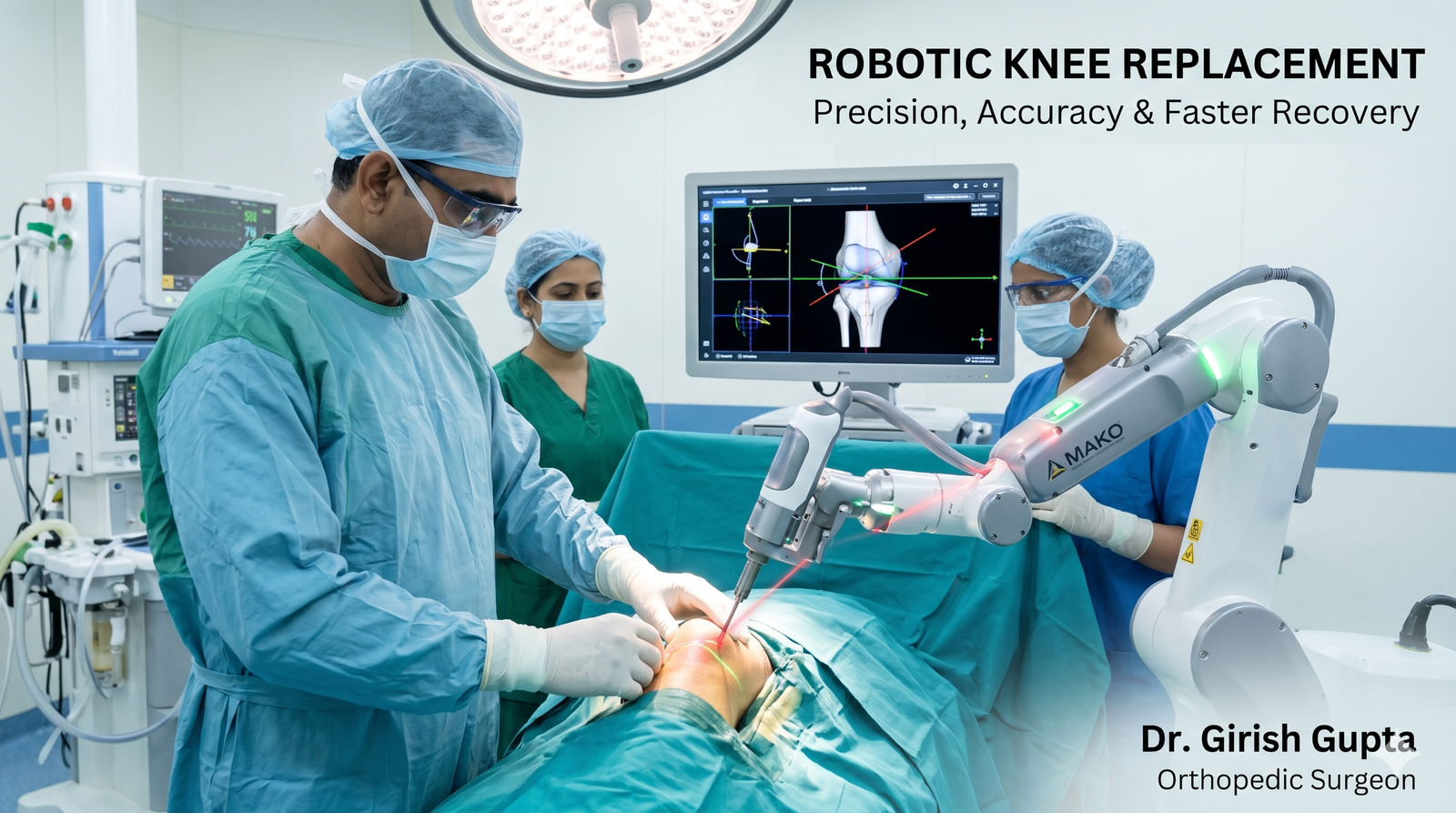
Robotic knee replacement is an advanced surgical approach that assists orthopaedic surgeons in planning and performing knee replacement procedures. It may be considered for patients experiencing severe knee pain, stiffness, and reduced mobility due to advanced arthritis or joint damage. At RK Hospital & Research Center, Indore, patients can consult Dr. Girish Gupta, Orthopaedic, Arthroscopy & Robotic Joint Replacement Surgeon, to understand their condition and explore appropriate treatment options.
Share This Article: