Irregular Periods – Causes, Symptoms and When to See a Gynecologist
Menstrual periods are an important part of a woman's reproductive health. Most women experience a regular menstrual cycle, but sometimes changes in cycle length, bleeding patterns or period frequency may occur.
Occasional changes can happen due to stress, lifestyle changes or hormonal fluctuations. However, consistently irregular periods may indicate an underlying medical condition that requires attention.
### What Are Irregular Periods?
A menstrual cycle is counted from the first day of one period to the first day of the next. For most adult women, a typical cycle lasts around 21 to 35 days. Periods may be considered irregular when cycle length frequently changes, periods occur too frequently or too rarely, or bleeding patterns become unusual.
### Common Signs and Symptoms of Irregular Periods
**1. Missed Periods:** Missing periods when not pregnant may indicate hormonal changes or other health conditions.
**2. Frequent Menstrual Periods:** Some women experience shorter gaps between menstrual cycles.
**3. Delayed Periods:** Repeatedly late periods may be associated with irregular ovulation or hormonal imbalance.
**4. Heavy Menstrual Bleeding:** Unusually heavy bleeding or periods lasting longer than seven days may require medical evaluation.
**5. Very Light Menstrual Bleeding:** Some women notice significantly lighter bleeding than their usual flow.
**6. Spotting Between Periods:** Bleeding between cycles can occur due to hormonal changes, contraceptive use or certain gynaecological conditions.
**7. Painful Periods:** Severe cramps or pelvic discomfort may occur along with changes in the menstrual cycle.
### What Causes Irregular Periods?
Several factors can affect the menstrual cycle:
- Polycystic Ovary Syndrome (PCOS).
- Thyroid disorders.
- Hormonal imbalance.
- Physical or emotional stress.
- Sudden weight gain or weight loss.
- Excessive exercise or inadequate nutrition.
- Approaching menopause.
- Pregnancy and breastfeeding.
Identifying the underlying cause is important for selecting the right treatment.
### How Are Irregular Periods Diagnosed?
A gynaecologist may evaluate menstrual history, symptoms, lifestyle factors and overall health. Depending on the patient's condition, investigations may include medical history and examination, pregnancy testing when required, blood tests to assess hormone and thyroid levels, and pelvic ultrasound.
Not every woman requires all these tests. Investigations are recommended according to individual needs.
### Treatment Options for Irregular Periods
Treatment depends on the underlying cause, age, symptoms and reproductive health goals.
**Lifestyle Modifications:** A balanced diet, regular physical activity, adequate sleep and healthy weight management may support menstrual health.
**Hormonal Medication:** Doctors may prescribe hormonal medicines to regulate menstrual cycles, depending on the underlying condition.
**PCOS Management:** Women with PCOS may require lifestyle changes, medication and regular medical monitoring.
**Thyroid Treatment:** If thyroid dysfunction is responsible, treating the thyroid condition may help improve menstrual regularity.
**Treatment for Gynaecological Conditions:** Conditions such as uterine fibroids may require specific medical or surgical treatment.
Treatment should be based on an accurate diagnosis and individual medical assessment.
### Tips to Maintain a Healthy Menstrual Cycle
- Maintain a balanced and nutritious diet.
- Include regular physical activity.
- Maintain a healthy body weight.
- Get sufficient sleep.
- Manage stress through healthy activities.
- Track menstrual dates and bleeding patterns.
- Attend regular gynaecological checkups.
Keeping a record of menstrual dates can help your doctor understand changes in your cycle.
### When Should You See a Gynecologist?
Consult a gynaecologist if you experience repeatedly irregular or missed periods, no menstrual period for three months or more when not pregnant, very heavy bleeding, periods lasting longer than seven days, bleeding between periods, severe pelvic pain or irregular periods with unexplained weight changes.
Seek urgent medical care if very heavy bleeding is accompanied by dizziness, fainting, severe weakness or severe abdominal pain, especially if pregnancy is possible.
### Expert Gynaecological Care at RK Hospital & Research Center, Indore
Irregular periods can sometimes be a sign of hormonal imbalance or an underlying gynaecological condition. Timely medical evaluation helps identify the cause and determine appropriate treatment.
At RK Hospital & Research Center, Indore, women can consult Dr. Neeti Gupta, Gynaecologist, for guidance on menstrual irregularities, hormonal concerns and other women's health conditions.
Do not ignore repeated changes in your menstrual cycle. Seek expert medical guidance and take care of your reproductive health.
Contact RK Hospital & Research Center, Indore, for consultation.
Disclaimer: This blog is for general educational purposes only and is not a substitute for professional medical advice, diagnosis or treatment.
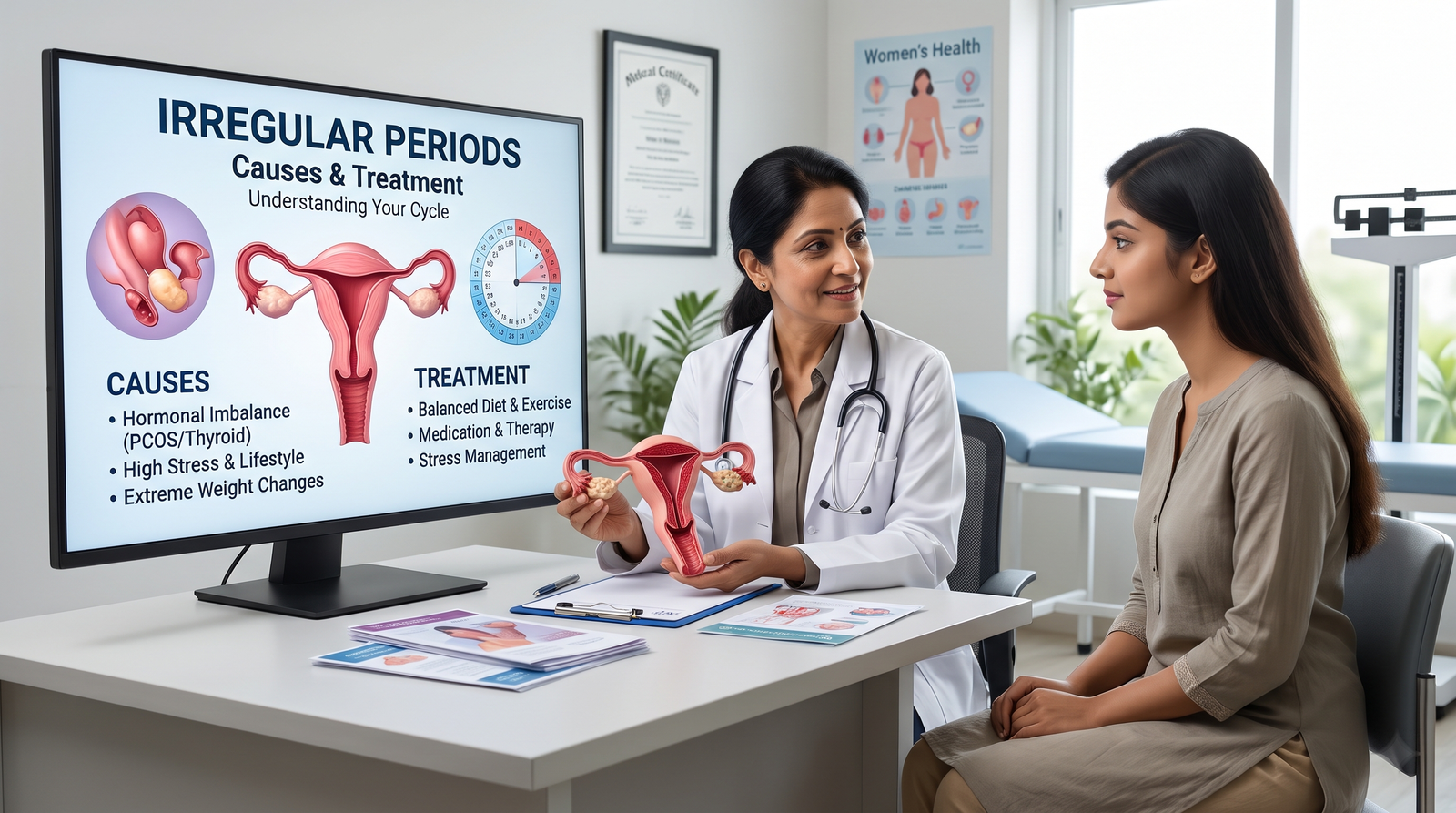
Irregular periods are a common menstrual health concern that can affect women at different stages of life. Changes in menstrual cycle length, missed periods, unusually heavy bleeding or frequent spotting may indicate hormonal changes or an underlying health condition. Common causes include PCOS, thyroid disorders, stress and changes in body weight. Understanding the causes and recognising the warning signs can help women seek timely medical advice and maintain better reproductive health.
Share This Article: