Early Warning Signs of Kidney Stones – Symptoms, Causes and Treatment
Kidney stones are a common urinary system condition that can cause significant discomfort and affect daily activities. They develop when minerals and salts present in urine become concentrated and form hard deposits inside the kidneys.
Some kidney stones are small and may pass naturally through urine. However, larger stones can become stuck in the urinary tract, causing severe pain, difficulty passing urine and other complications.
Recognising the early warning signs of kidney stones is important for timely diagnosis and appropriate treatment.
What Are Kidney Stones?
Kidney stones are hard deposits formed from minerals and salts present in urine. They can develop in one or both kidneys and vary in size.
When a stone moves from the kidney into the ureter, it may block the normal flow of urine and cause pain. The symptoms depend on the size, location and movement of the stone.
Common Signs and Symptoms of Kidney Stones
Some common symptoms of kidney stones include:
1. Severe Pain in the Back or Side
Sharp pain in the back, side or below the ribs is one of the most common symptoms. The pain may come in waves and can spread towards the lower abdomen or groin.
2. Pain or Burning During Urination
A kidney stone moving through the urinary tract may cause discomfort, burning or pain while passing urine.
3. Blood in the Urine
Urine may appear pink, red or brown due to the presence of blood. Sometimes blood can only be detected through a urine test.
4. Frequent Urination
Patients may experience an increased urge to urinate, particularly when a stone moves closer to the bladder.
5. Nausea and Vomiting
Severe pain caused by kidney stones may also lead to nausea and vomiting.
6. Cloudy or Unusual-Smelling Urine
Cloudy urine or an unusual smell may indicate a urinary tract infection, which can sometimes occur along with kidney stones.
7. Difficulty Passing Urine
A stone that blocks the urinary tract may interrupt the normal flow of urine. Difficulty passing urine requires prompt medical evaluation.
What Causes Kidney Stones?
Kidney stones can develop due to several factors, including:
- Inadequate water intake and dehydration.
- Excessive salt consumption.
- Certain dietary habits.
- Family history of kidney stones.
- Obesity and metabolic conditions.
- Certain medical conditions and medications.
- Previous history of kidney stones.
The exact cause may vary depending on the type of kidney stone.
Different Types of Kidney Stones
Kidney stones are classified according to the minerals and substances from which they are formed.
Calcium Stones: These are the most common type and are usually formed from calcium oxalate or calcium phosphate.
Uric Acid Stones: These may develop when urine contains high levels of uric acid or becomes too acidic.
Struvite Stones: These stones are commonly associated with certain urinary tract infections.
Cystine Stones: These are less common and are associated with an inherited condition that causes excess cystine in urine.
Identifying the type of kidney stone can help doctors recommend suitable treatment and preventive measures.
How Are Kidney Stones Diagnosed?
A urologist may recommend diagnostic tests to identify the size, location and type of kidney stone.
Common investigations may include:
- Urine examination.
- Blood tests.
- Ultrasound of the kidneys and urinary tract.
- CT scan, when clinically required.
- Stone analysis, if a stone is passed or removed.
The choice of tests depends on the patient's symptoms and medical condition.
Treatment Options for Kidney Stones
Treatment depends on the size, location and type of kidney stone, along with the patient's symptoms and overall health.
Medication and Observation: Some small stones may pass naturally. Doctors may recommend appropriate medication, pain management and monitoring.
Shock Wave Lithotripsy (SWL): This procedure uses focused shock waves to break selected kidney stones into smaller fragments that can pass through urine.
Ureteroscopy: A thin instrument is passed through the urinary tract to locate and treat the stone. Laser energy may be used to break it into smaller pieces.
Percutaneous Nephrolithotomy (PCNL): This minimally invasive procedure may be recommended for selected large or complex kidney stones.
The most suitable treatment is determined by a urologist after evaluating the patient's condition.
How Can You Prevent Kidney Stones?
Healthy lifestyle habits may help reduce the risk of developing kidney stones.
- Drink sufficient water throughout the day, unless advised otherwise by your doctor.
- Reduce excessive salt consumption.
- Maintain a balanced and healthy diet.
- Avoid excessive intake of foods that may contribute to your specific type of stone.
- Maintain a healthy body weight.
- Follow medical advice if you have previously experienced kidney stones.
Patients with a history of kidney stones may need specific dietary recommendations depending on the type of stone.
When Should You Consult a Urologist?
Do not ignore persistent back or side pain, blood in the urine, painful urination or repeated urinary discomfort.
Seek urgent medical attention if you experience severe pain with fever or chills, persistent vomiting, difficulty passing urine or very little urine. These symptoms may indicate an infection or urinary blockage that needs prompt treatment.
Expert Urological Care at RK Hospital & Research Center, Indore
Kidney stones can cause significant pain and may lead to complications if left untreated. Early diagnosis helps identify the condition and allows doctors to recommend appropriate treatment.
At RK Hospital & Research Center, Indore, patients can seek medical evaluation and guidance for kidney stones and related urinary conditions.
Consult a urology specialist if you experience symptoms of kidney stones and take the right steps towards better kidney health.
Contact RK Hospital & Research Center, Indore, for consultation.
Disclaimer: This blog is intended for general educational purposes only. It should not be considered a substitute for professional medical advice, diagnosis or treatment.
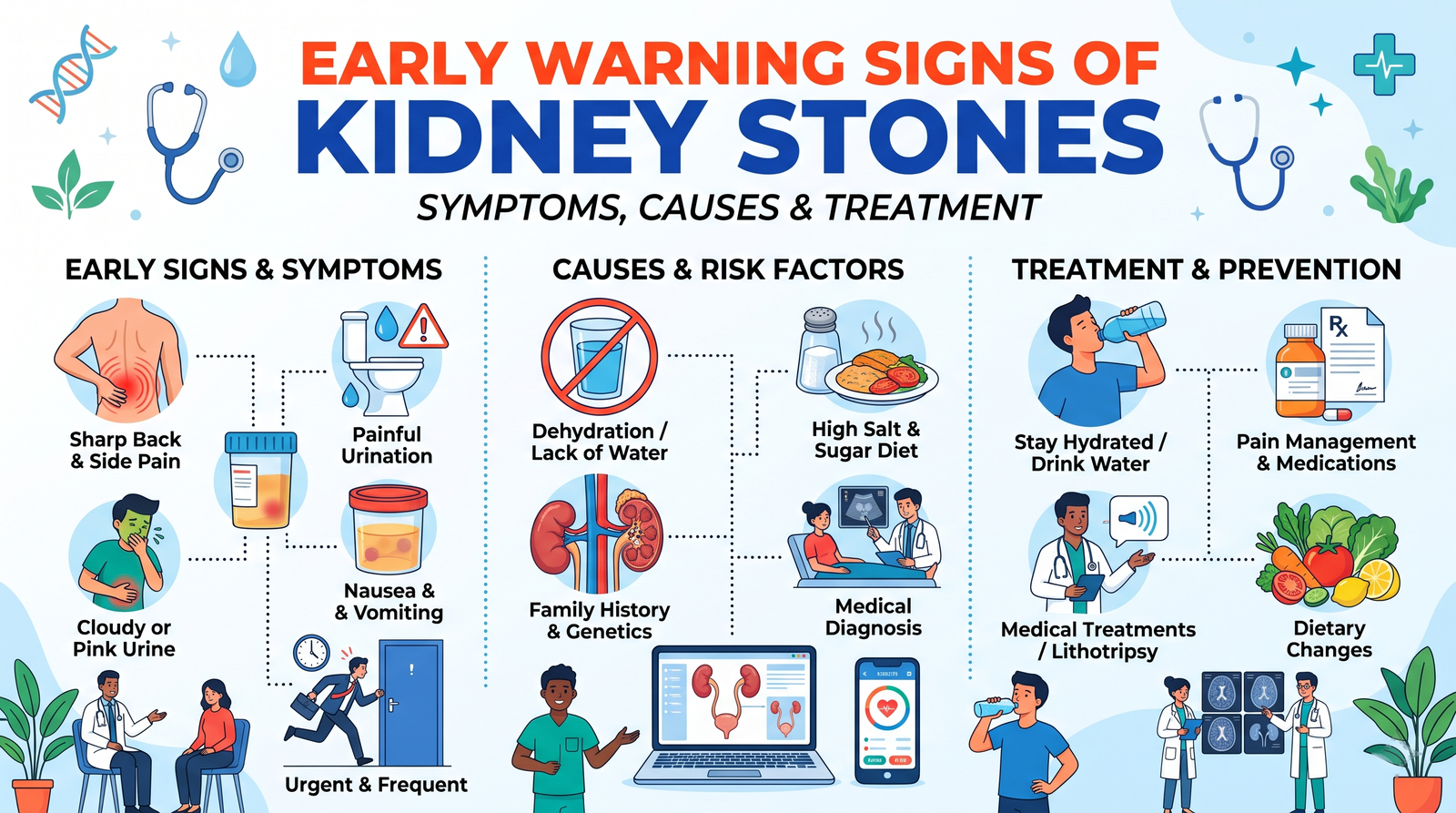
Kidney stones are hard deposits of minerals and salts that form inside the kidneys. They can cause severe back or side pain, painful urination, blood in the urine and nausea. Some kidney stones may pass naturally, while others require medical treatment. Recognising the early warning signs of kidney stones can help prevent complications and ensure timely medical care. At RK Hospital & Research Center, Indore, patients can consult a urology specialist for proper diagnosis and personalised treatment.
Share This Article: