Early Signs and Symptoms of Knee Arthritis – Causes, Diagnosis and Treatment
Knee pain is a common problem that can affect people of different age groups. While occasional discomfort may occur due to physical activity or minor injuries, persistent knee pain can sometimes indicate an underlying joint condition such as arthritis.
Knee arthritis develops when the protective cartilage inside the knee joint gradually wears down or becomes damaged. This can lead to pain, stiffness, swelling and difficulty performing everyday activities.
Recognising the early warning signs can help individuals seek medical attention and receive appropriate treatment before the condition significantly affects their mobility and quality of life.
What Is Knee Arthritis?
Knee arthritis is a condition that affects the knee joint and causes inflammation, cartilage damage and reduced joint movement.
Osteoarthritis is one of the most common types of knee arthritis. It develops when the cartilage that protects the ends of the bones gradually breaks down, causing discomfort and stiffness during movement.
Knee arthritis may affect one or both knees and can become more troublesome over time.
Common Signs and Symptoms of Knee Arthritis
Some of the common symptoms of knee arthritis include:
1. Persistent Knee Pain
Pain around the knee joint is one of the earliest signs. It may initially occur while walking, exercising, standing for long periods or climbing stairs.
2. Knee Stiffness
Stiffness may be experienced in the morning or after sitting for an extended period. Movement may gradually become easier after some activity.
3. Swelling Around the Knee
Inflammation inside the joint can cause swelling, tenderness and discomfort around the knee.
4. Difficulty Walking or Climbing Stairs
Knee arthritis may make routine movements such as walking, climbing stairs, squatting or getting up from a chair difficult.
5. Reduced Range of Motion
Patients may experience difficulty bending or completely straightening their knees because of joint stiffness and discomfort.
6. Grinding or Clicking Sensation
Some individuals experience a grinding or clicking sensation while bending or moving the knee. This symptom alone does not confirm arthritis but may need evaluation when accompanied by pain.
7. Weakness in the Knee Joint
The knee may feel weak or unstable, making it difficult to maintain balance or walk comfortably.
What Causes Knee Arthritis?
Several factors may contribute to the development of knee arthritis, including:
- Age-related wear and tear of the joint.
- Previous knee injuries or fractures.
- Excess body weight, which increases pressure on the knee joints.
- Family history of joint-related conditions.
- Repeated stress on the knee due to certain activities.
- Inflammatory joint conditions.
Understanding the underlying cause helps doctors determine the most appropriate treatment approach.
How Is Knee Arthritis Diagnosed?
An orthopaedic specialist may evaluate the patient's symptoms, medical history and physical condition to identify the cause of knee pain.
Depending on the clinical findings, diagnostic investigations may include:
- Physical examination of the knee joint.
- Assessment of knee movement and flexibility.
- X-rays to examine joint space and bone changes.
- MRI scans when additional evaluation of soft tissues is required.
Early diagnosis can help in planning suitable treatment and managing symptoms effectively.
Treatment Options for Knee Arthritis
Treatment depends on the severity of arthritis, the patient's age, activity level and overall health.
Common treatment approaches include:
Medication: Doctors may prescribe medicines to help manage pain and inflammation.
Physiotherapy: Guided exercises can help strengthen the muscles around the knee, improve flexibility and support joint movement.
Lifestyle Modifications: Maintaining a healthy weight and avoiding excessive strain on the knees can help reduce joint stress.
Injections: In selected cases, doctors may consider injections depending on the patient's condition and treatment requirements.
Knee Replacement Surgery: For patients with severe knee arthritis whose daily activities are significantly affected and who do not get adequate relief from non-surgical treatments, knee replacement surgery may be considered.
The treatment plan should always be based on an individual medical evaluation.
How Can You Maintain Healthy Knee Joints?
Some healthy habits may help support knee health and reduce unnecessary joint stress:
- Maintain a healthy body weight.
- Stay physically active with suitable low-impact exercises.
- Avoid excessive pressure on the knee joints.
- Follow proper exercise techniques.
- Wear comfortable and supportive footwear.
- Consult an orthopaedic specialist if knee pain persists.
When Should You Consult an Orthopaedic Doctor?
Persistent knee pain, repeated swelling, stiffness, reduced movement and difficulty walking should not be ignored.
If knee discomfort starts affecting your daily routine, consult an orthopaedic specialist for proper evaluation. Sudden severe pain, inability to bear weight or a hot and swollen knee with fever requires urgent medical assessment.
Expert Orthopaedic Care at RK Hospital & Research Center, Indore
Knee arthritis can affect mobility, independence and overall quality of life. Early diagnosis and appropriate treatment can help manage symptoms and improve everyday movement.
At RK Hospital & Research Center, Indore, patients can consult Dr. Girish Gupta, Orthopaedic, Arthroscopy & Robotic Joint Replacement Surgeon, for expert guidance on knee pain, arthritis and advanced joint treatment options.
Get the right medical guidance and take the first step towards healthier joints and better mobility.
Contact RK Hospital & Research Center, Indore, for consultation.
Disclaimer: This blog is intended for general educational purposes only. It should not be considered a substitute for professional medical advice, diagnosis or treatment
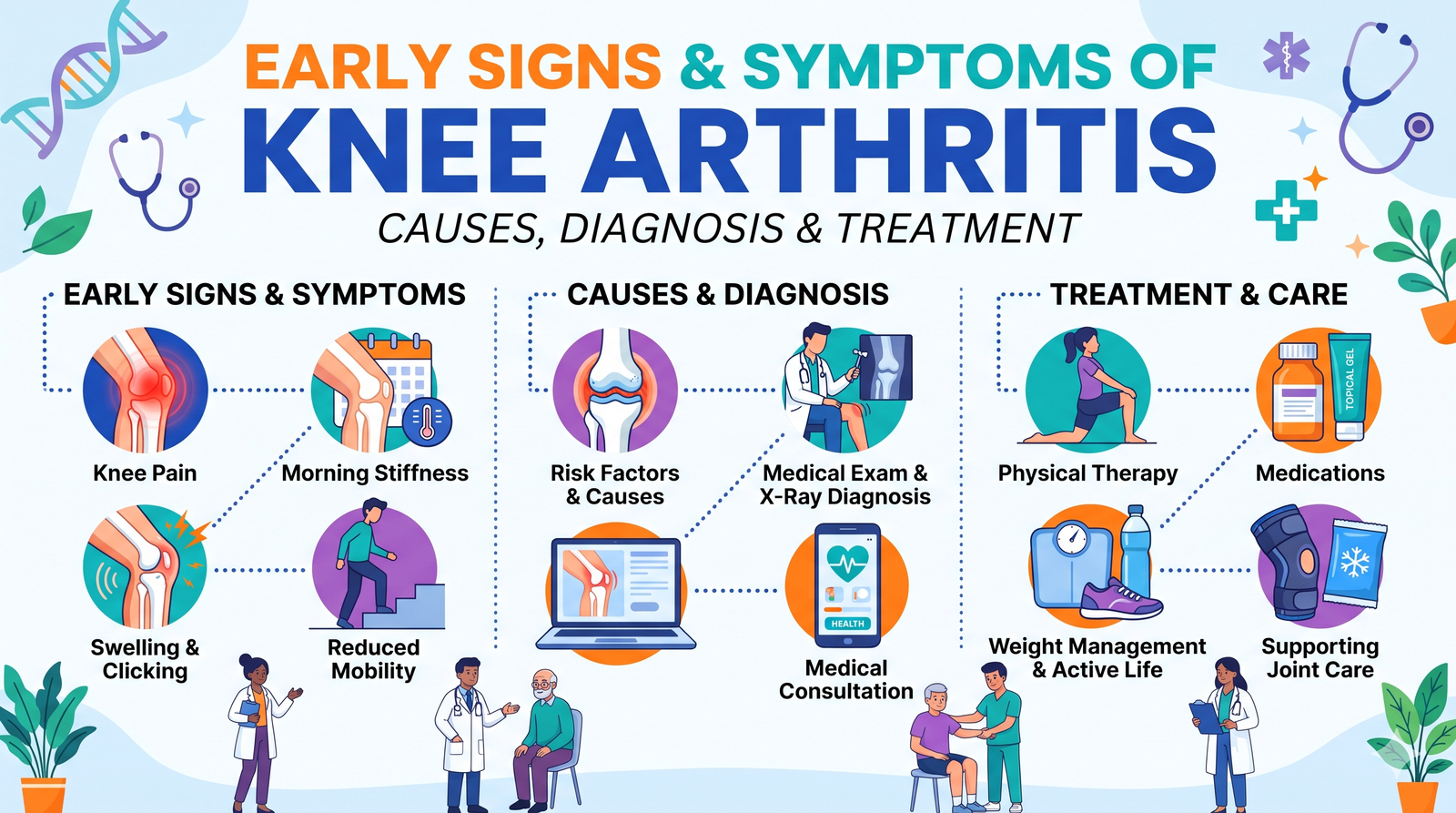
Knee arthritis is a common joint condition that causes pain, stiffness, swelling and difficulty in movement. It can gradually affect daily activities such as walking, climbing stairs, standing and sitting. Recognising the early signs and symptoms of knee arthritis is important for timely diagnosis and proper treatment. At RK Hospital & Research Center, Indore, patients can consult an orthopaedic specialist for expert evaluation and personalised treatment options to improve joint health and mobility.
Share This Article: